The X-PERT Clinical Trial: 20 Years On
September marks 20 years since the X-PERT trial was published in Diabetic Medicine. We’re looking back at this important milestone, what the research found and why the principles behind X-PERT remain so relevant today.
Before the trial
The X-PERT story began in 2000. With a recognition that simply providing people with information in a clinical setting wasn’t always enough to support effective day-to-day diabetes self-management.
A different approach to diabetes education began to take shape. One based on group learning, practical and visual educational resources, and helping people develop the knowledge and confidence to make their own informed choices.
This led to the development of the X-PERT Diabetes Programme.
Rather than expecting people simply to follow instructions, the programme was designed to encourage participants to become active partners in managing their diabetes.
Putting the approach to the test
In 2006, an important milestone was reached when the results of the X-PERT randomised controlled trial were published in Diabetic Medicine.
The study involved 314 adults with type 2 diabetes. Half were allocated to the X-PERT Programme and half to individual diabetes appointments, with participants followed for 14 months.
The X-PERT Programme consisted of six weekly group sessions covering topics including understanding diabetes, weight management, carbohydrate awareness, food labelling and a supermarket tour, and reducing the risk of complications. Goal setting formed part of each session.
But X-PERT wasn’t simply about providing more information.
The programme was designed around empowerment and discovery learning. Helping participants explore their choices, understand their diabetes and develop the confidence to make informed decisions about their own health.
What did the trial find?
At 14 months, the researchers reported a greater reduction in HbA1c among X-PERT participants compared with the control group. There were also greater reductions in body weight, BMI and waist circumference.
Importantly, the findings weren’t limited to clinical measures.
Participants attending X-PERT improved their diabetes knowledge and reported improvements in areas including treatment satisfaction and empowerment. The research also identified improvements in psychosocial adjustment, readiness to change and setting and achieving goals.
The study’s authors concluded that the programme had led to increased diabetes self-management and sustained improvements in clinical, lifestyle and psychosocial outcomes.
More than information
Looking back at the original paper 20 years later, one aspect feels particularly relevant.
The authors described empowerment not as something that can simply be given or taught, but as a process that people undertake for themselves.
The role of healthcare professionals, they argued, is to enable people to have the knowledge and confidence to make informed choices about their own care.
That philosophy was central to the original X-PERT Programme.
Rather than expecting people simply to follow instructions, participants were encouraged to be active partners in their diabetes care. Understanding their results, exploring their options, identifying their own priorities and deciding what changes were right for them.



Photos. From group education and practical learning to educator training and evolving resources, the way X-PERT is delivered has continued to develop over the years.
From 2006 to today
Twenty years is a long time in diabetes care – and X-PERT has continued to develop alongside it.
The educational resources themselves provide a glimpse of that journey. The first X-PERT Diabetes Handbook was printed in-house in 2005 and contained 72 pages. By 2013, the handbook had reached Version 9 – and orange had become a familiar part of the X-PERT identity. Our most recent Version 15.1 followed in 2024.
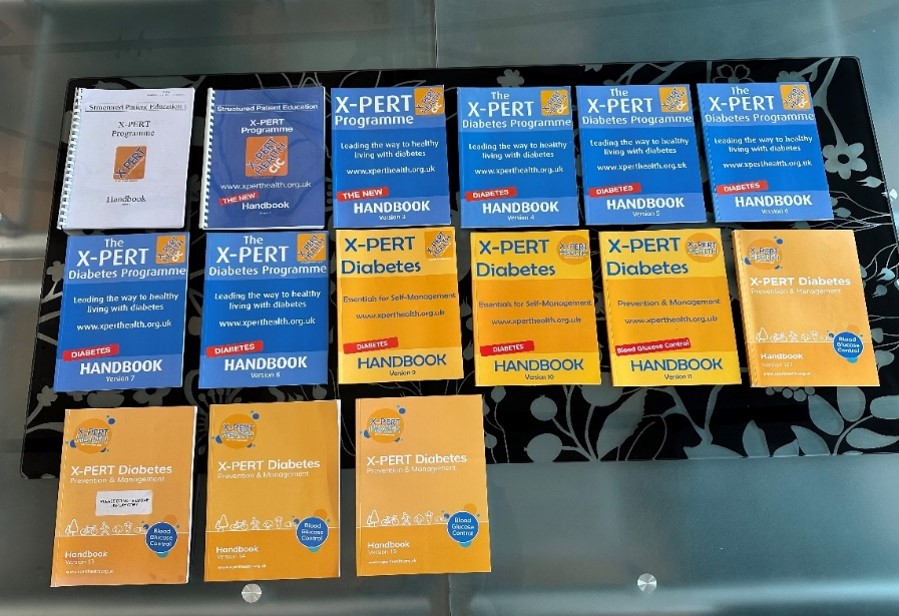
Photo. The X-PERT Diabetes books through the years
The way education is delivered has evolved too, as have our understanding of type 2 diabetes and the treatment options available to people living with the condition.
But one of the principles at the heart of the original X-PERT research remains central to our work today. People should have access to the knowledge, skills and support they need to make informed decisions about their own health.
As we mark 20 years since the publication of the X-PERT clinical trial, it’s an opportunity not only to look back at an important piece of research, but to recognise everyone who has contributed to the X-PERT story since.
And to look forward to what comes next.
